
Accutane
Accutane was the brand name for the first approved version of the drug isotretinoin. While many people still use the name Accutane for any medication that contains isotretinoin, that brand of the drug is actually no longer produced. The manufacturer of Accutane stopped making it in 2009. There are now other versions that have the same effectiveness as Accutane, including Absorica, Absorica LD, Amnesteem, Claravis, Myorisan, Sotret, Zenatane, and generic forms for isotretinoin.
What is Isotretinoin?
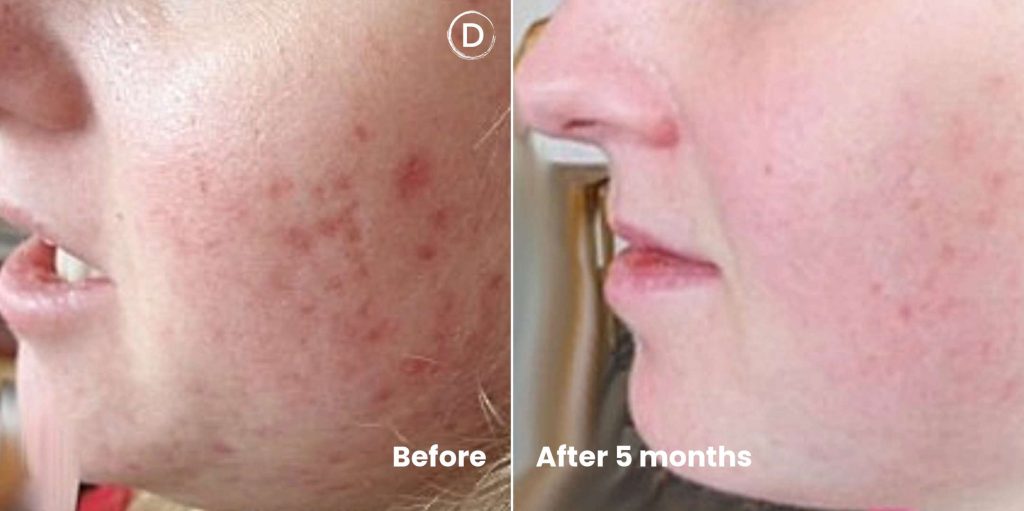
Isotretinoin is a prescription medication used for treating serious cases of acne vulgaris. It’s highly effective — most people who use it see an improvement in their acne. In many cases, it can be a permanent solution to acne that hasn’t responded to other types of treatment. It is a great medication to reduce inflammation and suppress the overproduction of sebaceous glands.
Despite its strong track record for treating acne, this medication has drawbacks. There is a risk of side effects while taking it. In addition, it can cause severe pregnancy complications and birth defects. People taking isotretinoin should not get pregnant during treatment.
This medication is not for everyone. It’s not meant as a treatment for mild breakouts. Doctors prescribe isotretinoin for the most severe forms of acne, sometimes called nodular acne or cystic acne. The symptoms of these types of acne are deep, painful cysts and nodules, which leave scars when they heal. This type of acne is often difficult to treat with more conventional treatments. In less severe cases it may be used if other treatments failed
Side Effects of Isotretinoin
Like many medications, isotretinoin comes with a risk of side effects. Many people who take this medication experience some side effects, particularly during the first weeks of taking the medication. Most commonly, the side effects are manageable, and they may improve over time. Allergic reactions to Accutane are rare.
Common side effects include:
- Muscle pain, stiffness, or difficulty moving.
- Nosebleeds.
- Scaling, redness, burning, pain, or other signs of inflammation of the lips.
- Skin infection or rash.
- Depression.
- Attempts at suicide or thoughts of suicide.
- Bleeding or inflammation of the gums.
- Changes in vision.

Frequently Asked Questions
Is there a link between isotretinoin (Accutane) and depression?
Prior to 2019, doctors reported that some people who took isotretinoin noticed an increase in feelings of depression. Some people reported feeling suicidal while taking the medication. It was not clear if the medication was causing the mental health symptoms. To understand whether there was a connection between isotretinoin and depression, in 2019, researchers evaluated the medical records of more than 38,000 patients aged 18 to 65. The records included people who had taken isotretinoin and people who had not.
The researchers found that 3.77% of the people who took isotretinoin reported depression symptoms. They also found that 4.81% of the people who did not take isotretinoin reported depression. They concluded that isotretinoin alone is not a cause of depression.
People with a history of depression should discuss that with their doctor before taking isotretinoin. Mental health is an important consideration in determining if isotretinoin is the right treatment.
Can isotretinoin cause inflammatory bowel disease (IBD)?
Over the years, some people have developed inflammatory bowel disease (IBD) during or after treatment with isotretinoin. That led to concerns that the drug was causing IBD. There have been multiple studies in the past decade that tried to determine if there is a link between the medication and IBD. No study could definitively show a causal link, and at least one study suggested a decreased risk of IBD after taking isotretinoin. Other studies suggest there may be a link between severe acne and IBD.
Isotretinoin can cause an upset stomach and other digestive symptoms. People who have a history of digestive issues should talk to their doctor before taking this medication.
How long does Accutane treatment usually last?
The treatment time for isotretinoin varies — 85% of people respond to treatment after 16 weeks, and 13% respond after 5 to 6 months on isotretinoin. There is no unifying “treatment for everyone” regimen with Isotretinoin. Some patients may be treated longer with lower dosages and if higher dosages used, the duration may be short (but still not less than 5-6 months).
Because of the strict regulations on the medication, anyone taking it will need to check in with their doctor every 30 days to monitor progress and get a refill on their prescription. This offers an opportunity to change the dosage and address any side effects.
What are the pregnancy risks associated with isotretinoin?
One of the biggest considerations before taking isotretinoin is the danger of pregnancy complications. Taking even a single dose of isotretinoin while pregnant poses a risk of miscarriage or other complications like premature birth.
It can also cause atypical fetal development, which can lead to conditions including:
- Facial differences, such as a cleft palate
- Congenital heart problems
- Small or missing ears
- Hearing loss
- Small eyeballs
- Vision loss
- Microcephaly
- Metabolic problems
What is the iPLEDGE program, and why is it required for Accutane patients?
Because of the high risk of pregnancy complications associated with this medication, there are strict rules in place for taking it. Any person who uses this treatment is required to avoid pregnancy during the duration of treatment.
Who should not take isotretinoin?
The severe risks associated with isotretinoin have led to strict regulation over prescribing it. All doctors and pharmacies that prescribe and dispense the treatment are registered with an FDA program called the iPLEDGE Risk Evaluation and Mitigation Strategy. Patients also have to enroll in the program before a doctor can write them a prescription. They must agree to the terms of the iPLEDGE program in order to receive treatment.
All patients who can become pregnant must agree to take a pregnancy test as soon as they decide to try isotretinoin. If the test is negative, they must begin a 30-day waiting period where they agree to use two forms of birth control. They will take a second pregnancy test before they can begin treatment.
Patients who can become pregnant must continue to use two forms of birth control for the duration of treatment and for one month after the last dose. Patients will have monthly appointments to refill their prescription, at which time their doctor will confirm that they are not pregnant. Monthly negative pregnancy tests are required to continue treatment. All appointments, pregnancy test results, and prescriptions for isotretinoin are recorded in the iPLEDGE system.
Isotretinoin likely does not transfer via sperm, so there is very little chance that a person taking isotretinoin could cause birth defects if they impregnate their partner during treatment. However, some people choose to use a condom to alleviate any potential risk.
Once patients complete treatment, they should continue to avoid pregnancy for at least 30 more days. Isotretinoin leaves the body within 35 days after stopping the medication. Pregnancy after that 35-day period is usually safe.
Are there other considerations I should be aware of?
Isotretinoin is not approved for people younger than 12 years old. Patients should tell their doctor about any medications they are taking, including dietary supplements.
People on isotretinoin should not breastfeed or donate blood during treatment and for one month after the final dose.
Isotretinoin may not be advisable for people who have certain health conditions, including:
- Asthma
- Diabetes
- Heart disease
- High cholesterol
- Liver disease
- Osteoporosis or low bone mineral density
During treatment, it is important to use sun protection and avoid tanning beds because isotretinoin can increase the risk of sunburn.
In the past we did not recommend procedures such as microdermabrasion or laser skin resurfacing during treatment or for several months after the last dose because of potential risk of scarring. Today, recent studies demonstrated that accutane can be safely combined with cosmetic procedures under the guidance of an expert.
Where Confidence Begins.
Reveal the beauty of healthy skin with treatments tailored to you. Dr. Kazlouskaya & her team combines medical expertise with artistry to deliver natural, timeless results.